HydraFacial for hormonal acne in women: does it really work?
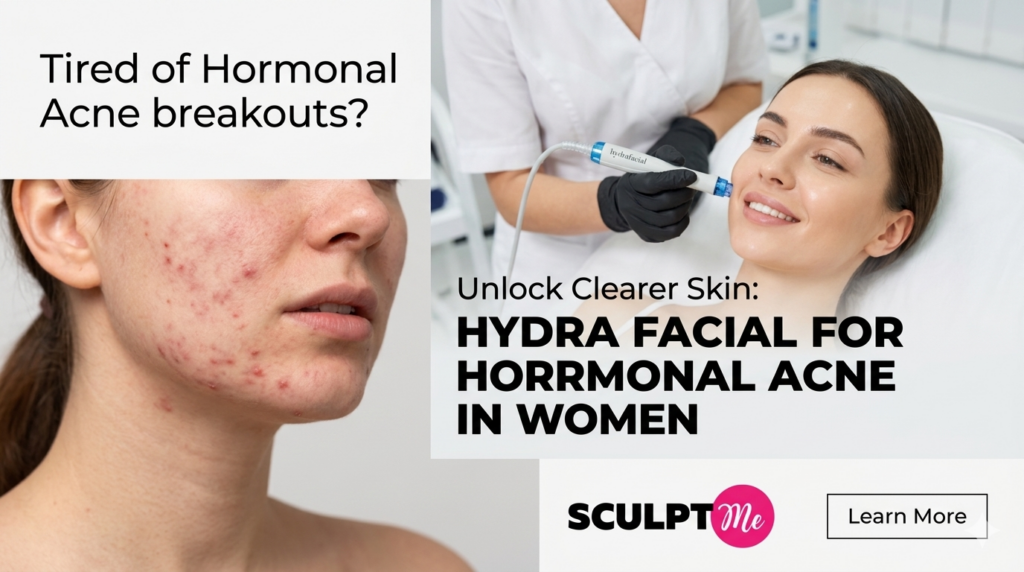
Hormonal acne has a particular cruelty to it. It shows up not in your teens , when at least everyone else seems to be dealing with the same thing , but in your 30s, 40s, even 50s. At a point when you’ve got enough going on, your skin decides to stage a revolt.
Jawline breakouts that follow your cycle. Chin spots that appear like clockwork before your period. Deep, painful cysts that linger for weeks. And the frustrating reality that the cleansers and spot treatments designed for teenage skin often make adult hormonal acne worse, not better.
HydraFacial has become a popular option for women dealing with this specific type of acne , not because it’s a hormonal treatment (it isn’t), but because it addresses the skin-level factors that make hormonal acne more visible and harder to manage. This guide explains what’s actually happening in your skin, how HydraFacial helps, and what you can realistically expect.
If you’re exploring non-surgical aesthetic treatments more broadly, our complete guide to women’s body sculpting in London explains how skin, body confidence, and aesthetic treatment plans often work together for long-term results.
Worth knowing: This article is for informational purposes. Hormonal acne with an underlying medical cause , such as PCOS , should be assessed by your GP or a dermatologist alongside any aesthetic treatment.
What’s covered in this guide:
- What hormonal acne is and why women are disproportionately affected
- How HydraFacial treats the skin-level causes of hormonal breakouts
- How many sessions are needed , and what results look like
- HydraFacial vs chemical peel, LED therapy, and prescription treatments (comparison table)
- Before and after: what to expect realistically
- How to book your acne-specialist session at SculptMe London
- Frequently asked questions
What is hormonal acne and why does it affect women?
Hormonal acne isn’t the same as general acne, and treating it as if it were is one of the most common mistakes women make. It’s driven by fluctuations in sex hormones , primarily androgens , that trigger the sebaceous glands to produce more sebum than the skin can process. That excess oil mixes with dead skin cells inside hair follicles, and the result is the blocked pores, inflammation, and breakouts that characterise the condition.
What makes it distinctively hormonal is its pattern. Breakouts tend to cluster around the lower face , jawline, chin, and neck , and follow a predictable monthly cycle rather than appearing randomly across the face. They’re often deep rather than superficial, and they tend to be more inflammatory than teenage comedonal acne.
The role of oestrogen and progesterone in breakouts
Oestrogen and progesterone fluctuate throughout the menstrual cycle, and those fluctuations directly affect how oily and reactive the skin becomes. In the week before menstruation, progesterone peaks and oestrogen drops. This hormonal combination increases sebum production and can slow the rate at which the pore lining sheds , creating the perfect conditions for a blocked follicle and subsequent breakout.
Androgens , particularly testosterone , also play a role. Women produce androgens in the ovaries and adrenal glands, and some women are more sensitive to their effects on the skin. Higher androgen sensitivity leads to more active sebaceous glands and a greater tendency toward breakouts regardless of overall hormone levels.
- Studies suggest that up to 50% of women aged 20–29 and around 25% of women in their 40s experience acne. In adult women, hormonal fluctuations are the primary cause in the majority of cases.
Perimenopause, PCOS, and adult female acne
Two specific conditions cause a significant proportion of hormonal acne cases in adult women:
Perimenopause and menopause: As oestrogen declines in the years around menopause, its balancing effect on androgens diminishes. Skin that was previously clear can become oily and breakout-prone , a change that often catches women off guard because acne is so strongly associated with youth.
Polycystic Ovary Syndrome (PCOS): PCOS involves elevated androgen levels, which directly stimulate excess sebum production. Women with PCOS often find that topical treatments alone don’t meaningfully control their breakouts without some management of the underlying hormonal cause.
Understanding the root cause of your acne matters because it shapes the treatment approach. For women whose acne is driven primarily by PCOS or a significant hormonal imbalance, a GP or dermatologist referral may be appropriate alongside any skin treatment.
- Quick tip: If your acne is new, persistent, or accompanied by other symptoms such as irregular periods, excess facial hair, or weight changes, speak to your GP before starting a course of aesthetic treatments.
How HydraFacial treats hormonal acne
HydraFacial doesn’t address the hormonal triggers of acne , that would require systemic intervention. What it does, consistently and effectively, is address the skin-level factors that determine how visible and how severe those breakouts become.
The treatment uses a patented vortex technology to combine four actions in a single session: deep cleansing, exfoliation, painless extraction, and serum infusion. For acne-prone skin, each of these steps has a specific and meaningful purpose.
The clarifying booster , salicylic acid at work
The standard HydraFacial protocol can be enhanced with targeted boosters. For hormonal acne, the clarifying booster is the most directly relevant option. It delivers salicylic acid , a beta hydroxy acid (BHA) , into the skin via the vortex system.
Salicylic acid is oil-soluble, which means it can penetrate into the sebaceous follicle itself rather than just working on the skin’s surface. Inside the pore, it dissolves the mix of sebum, dead skin cells, and debris that creates blockages. It also has anti-inflammatory properties, which help to calm the redness and swelling around active spots.
Delivered as part of HydraFacial rather than as a standalone peel, the salicylic acid is applied at a concentration that’s effective without being aggressive , making it suitable for women whose skin is already sensitised by hormonal reactivity.
- Worth knowing: The clarifying booster is one of several options. Your practitioner will recommend the most appropriate booster based on a skin assessment during your consultation , not on what’s most expensive.
Extraction without trauma
Manual extraction , the kind where a practitioner physically squeezes blocked pores , is a standard part of many facials. For hormonal acne, it’s one of the riskier steps. Done incorrectly or on the wrong type of blemish, manual extraction can push bacteria deeper into the skin, cause post-inflammatory hyperpigmentation, and create scarring.
HydraFacial uses a vacuum-based vortex system to extract congestion from pores without any manual pressure on the skin. The process lifts sebum, dead cells, and impurities out rather than pushing them around. For women dealing with active hormonal breakouts, this is a meaningful difference , clearing congestion while reducing the risk of making things worse.
You can see exactly what’s being extracted during treatment. The collection chamber shows the debris removed from your skin , which gives a clear, unambiguous picture of how congested the skin is, and how effectively the treatment is working.
Calming post-acne redness and inflammation
Hormonal acne rarely presents as just blocked pores. For most women, it involves a significant inflammatory component , red, swollen blemishes that take weeks to fully resolve, and often leave dark marks (post-inflammatory hyperpigmentation) even after the active acne has cleared.
The serum infusion step of HydraFacial delivers peptides, antioxidants, and hyaluronic acid into freshly cleared skin. These ingredients help to calm the skin’s inflammatory response, support the skin barrier, and reduce the redness that makes hormonal breakouts so visible.
Over a course of sessions, this cumulative calming effect can meaningfully reduce overall skin reactivity , making the skin less prone to the kind of aggressive inflammatory response that turns a hormonal breakout into a multi-week ordeal.
Many women who begin HydraFacial treatments for acne later explore anti-ageing skin treatments as well. If concerns such as fine lines, dullness, and loss of skin elasticity are also affecting your confidence, read our guide on why London women in their 40s and 50s are choosing HydraFacial for anti-ageing benefits.
- Quick tip: Women with very active or cystic acne may benefit from combining HydraFacial with LED light therapy between sessions. Blue LED is specifically antibacterial; red LED reduces inflammation. Ask your practitioner about combination protocols.
How many HydraFacial sessions to clear hormonal acne?
This is the question most women ask first, and the honest answer is: it depends on how severe your acne is and how consistently you can commit to treatment. A single session will make an immediate, visible difference to skin texture and congestion , but hormonal acne requires an ongoing approach, not a one-off fix.
Realistic session guide by severity:
- Mild hormonal breakouts (occasional spots, some congestion): visible improvement from session 2–3; a course of 4–6 typically sufficient
- Moderate hormonal acne (regular breakouts, some inflammation): noticeable improvement from session 3–4; 6–8 sessions recommended
- Persistent or PCOS-related acne: HydraFacial best used as part of a broader treatment plan; results vary more significantly
Sessions are typically spaced three to four weeks apart , in line with the skin’s natural renewal cycle. Spacing them too close together doesn’t accelerate results; spacing them too far apart means you’re starting from scratch each time rather than building on previous progress.
For a full breakdown of what to expect from HydraFacial across different skin types and concerns, our complete guide to HydraFacial for women in London covers the process in detail.
You can also explore our full range of skin and body contouring treatments at SculptMe London if you’re looking for a personalised aesthetic treatment plan beyond acne management alone.
- Important: Results vary between individuals. Women whose hormonal acne has a significant underlying hormonal cause may see more limited improvement from topical treatment alone. A consultation at SculptMe will give you an honest assessment of what HydraFacial can realistically achieve for your specific skin.
HydraFacial vs other acne treatments for women
There’s no shortage of options for treating hormonal acne , which makes choosing the right one genuinely confusing. The comparison below focuses on the treatments most commonly considered by adult women in London.
| Treatment | Downtime | Suitable for active acne? | Best for | Avg cost London | Pain level |
| HydraFacial | None | Yes (mild–moderate) | Congestion, oiliness, mild scarring | £150–£250 | None |
| Chemical Peel | 3–7 days | Not always , risk of irritation | Pigmentation, texture | £100–£300 | Moderate |
| LED Therapy | None | Yes | Inflammation, bacteria | £50–£150 | None |
| Microneedling | 2–4 days | No , avoid active breakouts | Acne scarring | £150–£350 | Moderate |
| Antibiotics / GP Rx | N/A | Yes | Hormonal acne (systemic) | Prescription cost | N/A |
The table makes one thing clear: different treatments excel at different things. HydraFacial’s strongest advantages are its zero downtime, its safety with active acne, and the fact that it combines multiple beneficial actions in a single session. It won’t outperform prescription medication for severe hormonal acne, but for women who want consistent maintenance and improvement without recovery time, it’s one of the most practical options available.
The same principle applies to body contouring treatments. If you’re comparing non-surgical options for fat reduction or body shaping, our guide to CoolSculpting, laser lipo, EMS sculpting and other body contouring treatments breaks down which treatment works best for different goals.
HydraFacial vs chemical peel for acne
Chemical peels use acids , glycolic, lactic, salicylic, or TCA , to exfoliate the skin at a deeper level than most facials. At the right concentration, they can effectively address acne congestion, pigmentation, and scarring.
The trade-offs are real, though. Most peels require 3–7 days of visible peeling and redness. They’re not suitable for use on active inflammatory acne without risk of irritation and post-inflammatory hyperpigmentation. And for women with hormonal skin that’s already reactive, the additional inflammation can sometimes trigger more breakouts before the skin improves.
HydraFacial delivers some of the same exfoliating benefits , particularly through the clarifying booster , without the downtime or the risk of aggravating active inflammation. It’s a more suitable starting point for women with sensitive or reactive hormonal skin.
HydraFacial vs LED therapy for acne
LED therapy uses specific wavelengths of light to target different aspects of acne. Blue LED (415nm) is specifically antibacterial , it kills the P. acnes bacteria responsible for inflammatory acne. Red LED (630nm) reduces inflammation and supports healing.
LED therapy is genuinely effective for active acne, particularly as a standalone maintenance treatment. It has no downtime and no risk of irritation. Its limitation is that it doesn’t address congestion, excess oil, or dead cell build-up , it only works on bacteria and inflammation.
The two treatments work well together. HydraFacial addresses the physical congestion and impurity factors; LED therapy manages the bacterial and inflammatory component between HydraFacial sessions. Many women with hormonal acne find this combination more effective than either treatment alone.
Before and after: hormonal acne transformations
Photographic before and after images are the most common way aesthetic clinics demonstrate results , and they’re a valid reference point when evaluating any treatment. A few things worth keeping in mind when looking at HydraFacial before and after results for acne:
- Images showing results after a single session typically reflect improvement in skin texture, tone, and oiliness , not a dramatic reduction in acne
- The most meaningful transformations shown after a full course reflect 4–8 weeks of cumulative treatment, not overnight change
- Results vary significantly based on acne severity, hormonal cause, skin type, and lifestyle factors including diet, stress, and sleep quality
- Reduction in post-inflammatory marks (the dark patches left after a breakout) tends to take longer than reduction in active acne , typically 8–12 weeks with consistent treatment
At SculptMe London, we document skin progress with photographs taken at consistent intervals throughout a course of treatment. This gives both the client and the practitioner a clear picture of what’s working and what may need to be adjusted.
Worth knowing: We don’t use edited or filtered images in our client documentation. Results shown reflect real skin under consistent clinical photography conditions.
Many women choose to combine skincare improvements with wider confidence-focused aesthetic treatments. Alongside HydraFacial, SculptMe offers non-surgical fat reduction, muscle toning, and body contouring treatments designed to complement your overall transformation journey.
Book at SculptMe , acne-specialist HydraFacial London
SculptMe London is a women’s aesthetic clinic specialising in non-surgical treatments for skin and body. Our practitioners have specific experience treating hormonal and adult acne , not just textbook breakouts, but the persistent, cycle-driven, sometimes deeply frustrating kind that affects women across their 30s, 40s, and beyond.
Every client starts with a thorough consultation. We look at your breakout pattern, your skincare history, any treatments you’ve tried, and your broader health picture. From that, we build a treatment plan , including the most appropriate HydraFacial protocol and booster combination , that’s specific to your skin, not generic.
What your consultation includes:
- Full skin assessment and breakout pattern analysis
- Discussion of hormonal factors and medical history
- Honest assessment of what HydraFacial can and can’t do for your acne
- Booster recommendation tailored to your skin concerns
- A clear treatment plan with realistic expected outcomes
- No pressure, no obligation to proceed
To book your consultation, visit SculptMe London’s HydraFacial service page or call the clinic directly.
Related guides from SculptMe London
Considering non-surgical body contouring alongside your skincare journey? These guides may help:
- Learn how Green Laser Lipo works for stubborn fat reduction in women and whether you’re a suitable candidate.
- Wondering about treatment costs? See our detailed breakdown of laser lipo pricing in London and what influences the final cost.
- Concerned about recovery or treatment safety? Read our guide covering Green Laser Lipo side effects, safety considerations and recovery expectations.
- Already had treatment or planning ahead? Discover how to maintain your Green Laser Lipo results long-term.
- Looking to improve muscle tone rather than reduce fat? Explore EMS Body Sculpting and how it helps build muscle definition without surgery.
- Interested in targeted fat reduction? Learn more about Green Laser Lipo treatment at SculptMe London.
Reference
- British Association of Dermatologists , bad.org.uk , for acne clinical guidelines
- British Skin Foundation , britishskinfoundation.org.uk , patient-facing skin condition information
- Verity (UK PCOS charity) , verity-pcos.org.uk , for PCOS-related acne context
- NHS , nhs.uk/conditions/acne , for foundational acne information and treatment referral pathway
- Journal of the American Academy of Dermatology , peer-reviewed references on hormonal acne in adult women
FAQ
It’s uncommon, but possible after a first session if the skin is highly sensitised or if significant congestion is brought to the surface during extraction. Some women notice a brief purging period , a temporary increase in breakouts as the skin clears , in the week following their first treatment. This typically settles by session two. Your practitioner will assess your skin before treatment and may adjust the protocol to reduce this risk. Tell your practitioner if you have active cystic acne on the day of your appointment, as they may recommend postponing until inflammation has reduced.
The clarifying booster , which delivers salicylic acid via the HydraFacial vortex system , is the most commonly recommended option for hormonal acne. It addresses congestion, oiliness, and mild inflammation directly. If post-inflammatory hyperpigmentation (dark marks from previous breakouts) is also a concern, your practitioner may suggest combining the clarifying booster with the BRITENOL booster, which targets uneven pigmentation. The right booster combination will always be confirmed at consultation rather than applied generically.
HydraFacial is generally not recommended on active cystic blemishes. Cystic acne sits deep in the skin and is highly inflammatory , the extraction step could aggravate active cysts rather than helping them. Experienced practitioners will typically avoid the affected area or postpone treatment if significant cystic activity is present. If cystic acne is a regular occurrence, a GP or dermatologist referral is advisable alongside any aesthetic treatment, as cystic acne often requires systemic management.
HydraFacial can help with the surface-level skin changes that follow acne , particularly post-inflammatory hyperpigmentation (dark flat marks) and some textural irregularities. It’s less effective on deep, pitted (atrophic) scarring, which typically requires more targeted treatments such as microneedling, fractional laser, or dermal filler. Many women use HydraFacial to maintain clear skin and prevent new scarring while undergoing separate treatment for existing scars.
For active hormonal acne, monthly sessions are the standard recommendation , aligning with the skin’s natural renewal cycle and the monthly hormonal pattern. Some practitioners recommend sessions every three weeks during an initial course to build results more quickly. After acne is better controlled, many women transition to a maintenance schedule of every 4–6 weeks. Your practitioner will advise on the most appropriate frequency based on your skin’s response after your first session.
Yes , there is no downtime and no restriction on make-up application after treatment. The skin may have a slightly flushed appearance for a few hours, which most women find resolves fully by the end of the day. For acne-prone skin specifically, it’s worth checking that your foundation and concealer are non-comedogenic (won’t block pores) to avoid undoing the congestion-clearing work of the treatment.
Yes, with the caveat that HydraFacial addresses the skin-level symptoms rather than the hormonal root cause. Women with PCOS-related acne often find HydraFacial helpful as part of a broader management plan , it keeps the skin clear, reduces congestion, and minimises the impact of hormonal breakouts. However, for women whose PCOS acne is severe or driven by significantly elevated androgens, systemic treatment prescribed by a GP or endocrinologist is likely to be a more impactful intervention, and HydraFacial works best alongside rather than instead of that care.
Standard HydraFacial sessions in London typically range from £150–£250. The addition of the clarifying booster for acne-prone skin may be included in some packages or priced as an add-on. A course of six sessions usually offers a more cost-effective rate than individual bookings. For current SculptMe London pricing, visit the HydraFacial service page or contact the clinic directly.